

Geoffrey Fieger net worth in 2026 is estimated at approximately $50 million, reflecting more than four decades of success in high-stakes litigation and law firm ownership. Known as one of Michigan’s most recognizable trial lawyers, Fieger built his fortune by representing clients in personal injury, medical malpractice, civil rights and wrongful death cases.
His national reputation grew significantly after he became the attorney for controversial physician Dr. Jack Kevorkian. As the founder of Fieger Law, he has been associated with numerous multimillion-dollar verdicts and settlements throughout his legal career. His courtroom victories, contingency-based attorney fees and ownership of a successful law practice remain the primary sources of Geoffrey Fieger’s wealth.
Television appearances on major networks also strengthened his public profile and helped establish him as a prominent legal commentator. Although his exact assets, salary and business income have never been publicly disclosed, his professional record supports an estimated fortune of around $50,000,000.
This article explores Geoffrey Fieger’s biography, career, family, famous cases and the financial journey behind his million-dollar success.
Quick Bio
| Detail | Information |
| Full name | Geoffrey Nels Fieger |
| Born | December 23, 1950, Detroit, Michigan |
| Age in 2026 | 75, turning 76 on December 23 |
| Raised in | Oak Park, Michigan |
| Profession | Trial lawyer, personal injury attorney, legal commentator |
| Education | B.A. and M.A., University of Michigan; J.D., Detroit College of Law |
| Law firm | Fieger Law, Southfield, Michigan |
| Wife | Kathleen “Keenie” Fieger |
| Children | Three, including two sons and a daughter |
| Famous for | Jack Kevorkian cases and major civil verdicts |
| Estimated net worth | Around $50 million, unofficial |
Who Is Geoffrey Fieger?
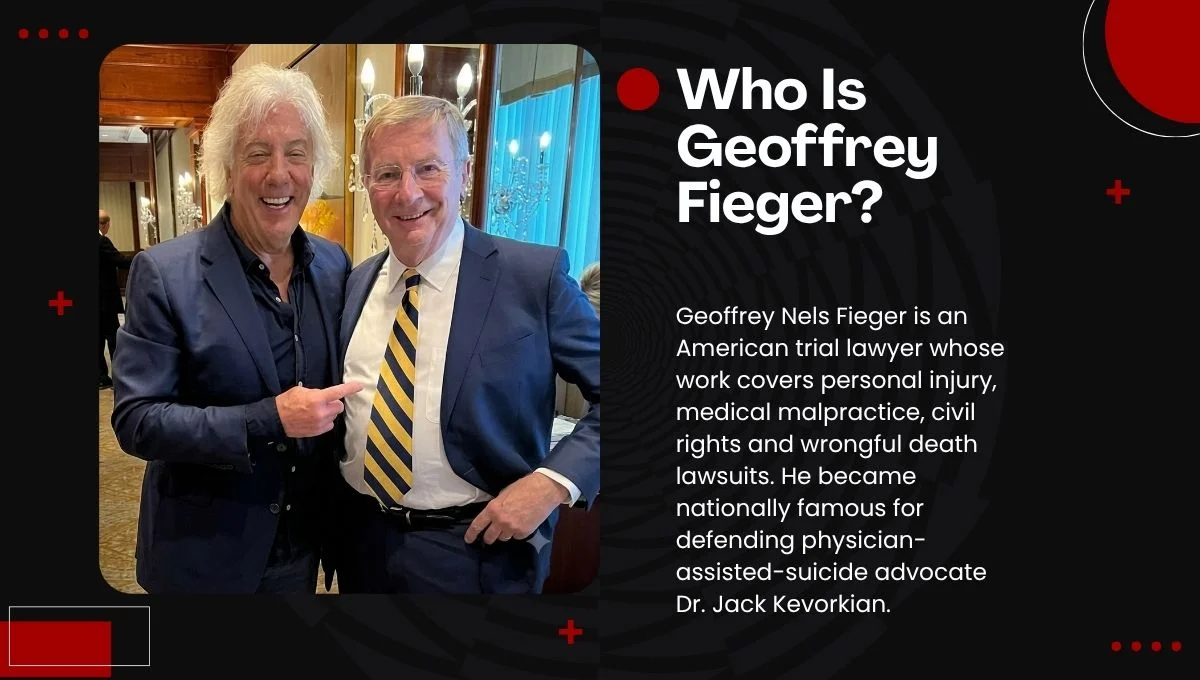
Geoffrey Nels Fieger is an American trial lawyer whose work covers personal injury, medical malpractice, civil rights and wrongful death lawsuits. He became nationally famous for defending physician-assisted-suicide advocate Dr. Jack Kevorkian.
His biography also includes media and politics. He appeared on CNN, Fox News and MSNBC, featured on Fox’s Power of Attorney and hosted CBS radio’s Fieger Time. Fieger Law says he has practiced for more than 45 years.
Early Life and Career of Geoffrey Fieger
Born in Detroit, Fieger grew up in Oak Park, Michigan. His father, Bernard Fieger, was an attorney and civil rights advocate whose practice became today’s Fieger Law.
After earning his law degree in 1979, Geoffrey joined the firm. It says he secured a $1 million result in his first case, launching a career in trial advocacy and major lawsuit settlements.
Education Timeline
| Year | Qualification | Institution |
| 1974 | Bachelor of Arts | University of Michigan |
| 1976 | Master of Arts | University of Michigan |
| 1979 | Juris Doctor | Detroit College of Law, now part of Michigan State University College of Law |
Fieger studied theater and speech, subjects that complemented the storytelling and presentation skills later associated with his courtroom strategy. His firm biography also notes that he acted and played football at the University of Michigan.
Must Read : Serena Neel Biography (2026) – Age, Husband, Net Worth & Lifestyle
Geoffrey Fieger Wife & Daughter

Geoffrey Fieger’s wife is Kathleen “Keenie” Fieger. Fieger Law says the couple has been married for more than 30 years and has three children: two sons and a daughter.
A public firm post identifies his daughter as Quinn, but detailed information about Geoffrey Fieger’s children remains limited. The family has generally kept the children outside the legal and political spotlight.
How Old Is Geoffrey Fieger?
Geoffrey Fieger is 75 years old as of July 2026. Born on December 23, 1950, he will turn 76 on December 23, 2026. CBS election coverage also recorded his birth date and Detroit birthplace.
How He Made His Wealth
Geoffrey Fieger wealth comes mainly from law firm ownership and contingency-based litigation. His salary, income, attorney fees and asset values are private, so published earnings figures remain estimates.
Legal Practice
As a personal injury attorney and medical malpractice lawyer, Fieger built a practice in which fees are commonly tied to successful verdicts or settlements. Major wins can create substantial revenue, although case costs, staff pay, taxes and appeals reduce the owner’s final income.
Fieger Law says it has won more than $2 billion for clients and charges no fees unless it wins. That $2 billion is client recovery, not Geoffrey Fieger income or personal wealth.
High-Profile Cases
Cases involving Jack Kevorkian, The Jenny Jones Show, birth injuries and police misconduct expanded Fieger’s national reputation. The firm lists results including $144.5 million for birth trauma, $136.7 million for medical malpractice and $56.5 million for police misconduct.
Verdicts can be reduced, appealed or collected over time. Therefore, a headline jury verdict should not be treated as direct Geoffrey Fieger salary or take-home earnings.
Media Appearances
His work as a legal commentator on NBC-related programming, MSNBC, CNN and Fox News introduced him to audiences beyond Michigan. Media work may provide fees, but its larger financial value is publicity that can attract clients.
Danny Huston portrayed him in HBO’s 2010 film You Don’t Know Jack, showing how closely his public image became tied to the Kevorkian legal battles.
Other Business Work
The clearest verified business activity is Fieger Law. Claims about extensive real estate investments, passive income or unrelated ventures lack detailed public support, so his fortune appears driven mainly by firm ownership, litigation success, referrals and brand value.
How Geoffrey Fieger Became Famous
Fieger became famous in the 1990s as Geoffrey Fieger, Jack Kevorkian’s lawyer. He helped Kevorkian secure acquittals in assisted-suicide prosecutions, placing both men at the center of a national debate over medicine, autonomy and criminal law.
His profile grew again in the 1998 Michigan governor election. Running as the Democratic Party nominee, he challenged Republican John Engler but lost with about 37.8% of the statewide vote.
Don’t Miss : Stray Kids Net Worth 2026 (Updated Wealth, Members Earnings & Income Breakdown)
Estimated Net Worth in 2026
Geoffrey Fieger’s Net Worth in 2026 Is Estimated at Around $50 Million
Geoffrey Fieger net worth 2026 is reasonably estimated at around $50 million, but the figure is neither audited nor Forbes-confirmed. No public balance sheet reveals his firm ownership value, investments, debts, taxes or complete Geoffrey Fieger assets.
A practical range is $35 million to $60 million, with $50 million as the midpoint. It reflects more than four decades of attorney earnings, ownership in a nationally recognized firm, major verdict-driven business and media value.
Online estimates vary because Fieger Law is private. Its reported $2 billion-plus client recoveries cannot be counted as Geoffrey Fieger fortune because most belongs to clients and other parties.
Geoffrey Fieger’s Most Notable Clients and Landmark Cases
Dr. Jack Kevorkian Case
The Kevorkian cases made Fieger a celebrity lawyer. His courtroom advocacy helped Kevorkian avoid conviction in several 1990s proceedings, although Kevorkian was later convicted after representing himself in a separate case.
Other High-Profile Legal Victories
Notable Geoffrey Fieger cases include:
- A $25 million jury verdict for Scott Amedure’s family against parties connected to The Jenny Jones Show, later overturned on appeal.
- Major medical malpractice, birth injury and police misconduct verdicts.
- Civil litigation arising from the Oxford High School shooting and other nationally reported tragedies.
The Amedure result brought national attention, but the Michigan Court of Appeals later ruled that the show lacked the legal duty required for liability. Accurate reporting should include both the verdict and reversal.
Impact on His Reputation and Earnings
High-profile cases built Fieger’s reputation as an advocate willing to try controversial matters. Courtroom success generated business, while national publicity strengthened Fieger Law’s referral network and visibility.
Geoffrey Fieger’s Law Firm and Business Success
Fieger Law Overview
Fieger Law traces its history to Bernard Fieger’s Detroit practice, founded in 1950. It later moved to Southfield and developed into a personal injury law firm serving clients across Michigan and beyond.
The practice handles medical negligence, wrongful death, auto accidents, product liability and civil rights litigation. Its website identifies Geoffrey Fieger as founder and James Harrington as president and CEO.
Firm Achievements
Highlights include:
- More than $2 billion reported as won for clients.
- Several nine-figure jury verdicts.
- A $4 million gift establishing the Geoffrey Fieger Trial Practice Institute.
- National media recognition for major verdicts.
MSU Law celebrated the institute’s 25th anniversary in March 2026, describing it as a hands-on litigation training program.
How the Firm Contributes to His Net Worth
As founder, Fieger’s wealth is likely linked to firm profits, ownership value and the commercial strength of his name. However, no reliable public valuation establishes what Fieger Law is worth.
Geoffrey Fieger law firm earnings cannot be calculated from verdict totals. Client payments, case expenses, co-counsel shares, employee compensation, taxes and appeals all affect the firm’s actual profit.
Geoffrey Fieger’s Awards, Recognition, and Public Image
Professional Honors
Fieger Law lists recognition from Michigan Lawyers Weekly, DBusiness, The National Law Journal and the American Trial Lawyers Association. The Michigan State University law school’s Trial Practice Institute also carries his name.
Public Speaking and Media Presence
Television and radio established him as a legal analyst and public speaker. His blunt style attracted admiration and criticism, making him one of Michigan’s most memorable legal figures.
Legacy in the Legal Profession
Fieger’s legacy rests on preparation, theatrical communication and willingness to take difficult cases before juries. His $4 million law-school gift also connected his name to the education of future trial lawyers.
Personal Life and Interests
Fieger has long been associated with Bloomfield Hills, Michigan, where he lived with his family. He is the older brother of the late Doug Fieger, lead singer of The Knack and co-writer of the 1979 hit “My Sharona.”
In March 2023, he suffered a stroke after a procedure for a heart arrhythmia. His wife said he was recovering, and the firm reported that he was participating in rehabilitation. As of July 2026, no detailed public medical report describes the full extent of his recovery, though Fieger Law continues to list him as founder and attorney.
Frequently Ask1ed Questions
What is Geoffrey Fieger’s net worth?
Geoffrey Fieger net worth is estimated at around $50 million in 2026, but the figure is unofficial because his finances are private.
How old is Geoffrey Fieger?
He is 75 as of July 2026 and turns 76 on December 23, 2026.
Is Geoffrey Fieger still alive?
Yes. His official law firm continues to list him as its founder and attorney.
What happened to Geoffrey Fieger?
He suffered a stroke in March 2023 after a procedure for a minor heart arrhythmia and entered rehabilitation.
Who is Geoffrey Fieger’s wife?
His wife is Kathleen “Keenie” Fieger. They have two sons and a daughter.
Does Geoffrey Fieger have children?
Yes. Geoffrey Fieger has three children.
Where does Geoffrey Fieger live?
Public biographies have long connected his family with Bloomfield Hills, Michigan.
What law firm does Geoffrey Fieger own?
He founded Fieger Law, a Southfield firm focused on injury, malpractice, civil rights and wrongful death claims.
What cases made Geoffrey Fieger famous?
The Jack Kevorkian trials made him nationally famous, followed by the Jenny Jones litigation and other major civil cases.
How much does Geoffrey Fieger earn?
His salary and income per case are private and depend on firm profits, case outcomes, expenses and taxes.
Is Geoffrey Fieger still practicing law?
His firm profile remains active, but his current day-to-day courtroom role after the stroke is not publicly detailed.
What is Fieger Law worth?
No verified valuation is public. Verdict totals are not the same as law firm revenue or market value.
Who is Doug Fieger?
Doug Fieger was Geoffrey’s younger brother, lead singer of The Knack and co-writer of “My Sharona.”
Did Geoffrey Fieger defend Jack Kevorkian?
Yes. He defended Kevorkian in multiple high-profile proceedings during the 1990s.
Conclusion
The Geoffrey Fieger success story combines legal expertise, courtroom risk, media exposure and law firm entrepreneurship. From Oak Park to landmark litigation and Fieger Law, he built a reputation with national reach.
Geoffrey Fieger net worth 2026 is best estimated at about $50 million, while recognizing that no audited disclosure confirms the figure. His influence is easier to document through verdicts, legal education, firm growth and public visibility than through an exact bank balance.

Khurram Ali is a dedicated content writer at StarSecretsHub.com, specializing in celebrity biographies, net worth analysis, and lifestyle insights. He creates well-researched, engaging, and easy-to-read content that explores the lives, success stories, and hidden facts of global celebrities. With a strong focus on accuracy and SEO-friendly writing, Khurram aims to deliver valuable and entertaining content for readers interested in the world of fame and fortune.